

5 Lessons We Learned from Landscape Architecture School at Cal Poly
At Cal Poly, landscape architecture is taught as a discipline rooted in analysis, systems thinking, and the relationships among land, people, and built form. It's an education that prioritizes process over trend and clarity over ornament. At Contexto, that foundation continues to guide how we approach every landscape we design and build.
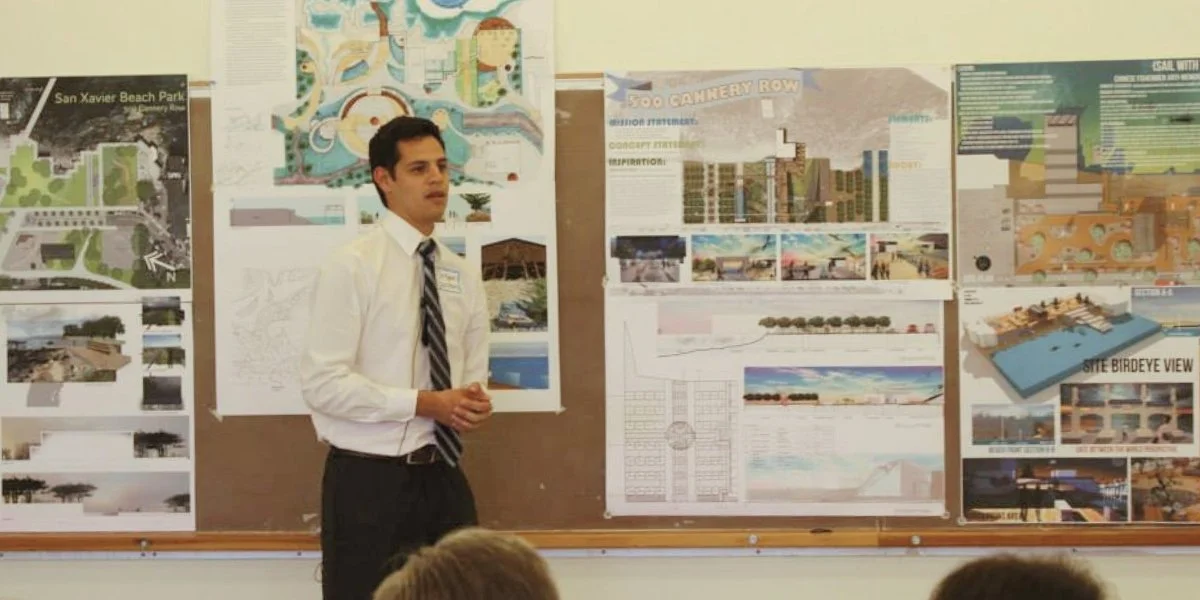
Enrique Guzman (Principal Designer and Owner) presents at a Cal Poly studio critique, 2013.
1. Design Is About Relationships, Not Aesthetics Alone
Cal Poly instills a fundamental principle: design is the resolution of relationships between circulation and program, planting and structure, material and climate. Individual elements don't define a successful landscape; it's how they work together.
At Contexto:
Our designs are composed as cohesive systems. Each decision is informed by its relationship to the whole, resulting in landscapes that feel balanced, intentional, and enduring.
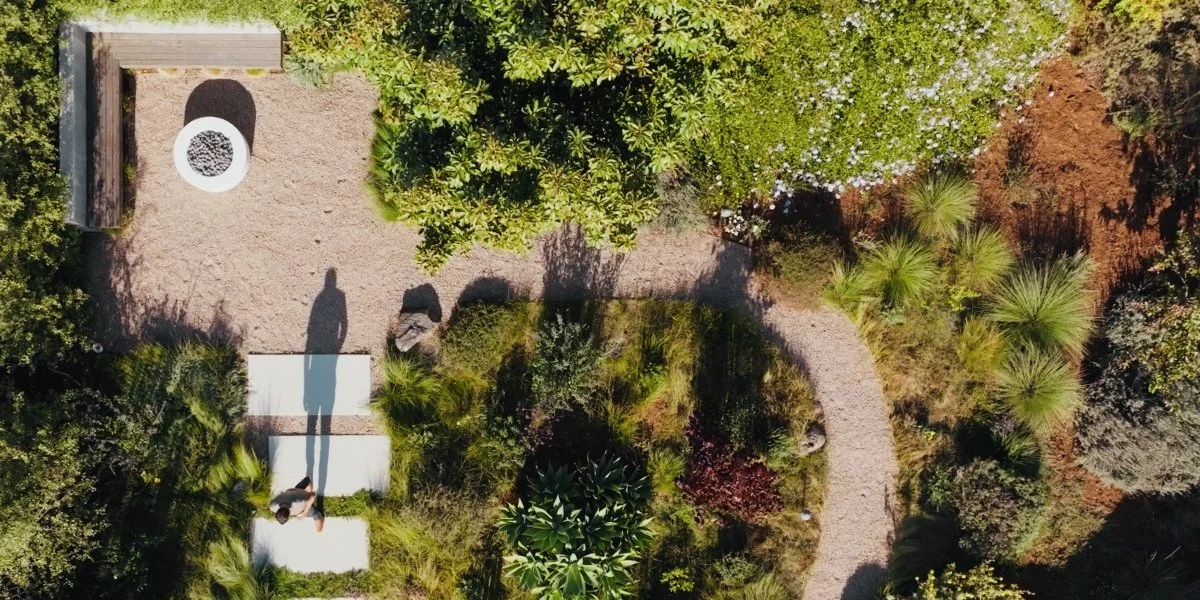
A Contexto landscape design that beautifully integrates design intent and the site.
2. The Site Is the Primary Design Driver
Before form comes analysis, at Cal Poly, every project begins with understanding the site — its topography, hydrology, solar exposure, and existing conditions. The land informs the design, not the other way around.
At Contexto:
We design landscapes that respond directly to their environment, allowing grading, drainage, and plant selection to feel natural, resolved, and grounded in place.
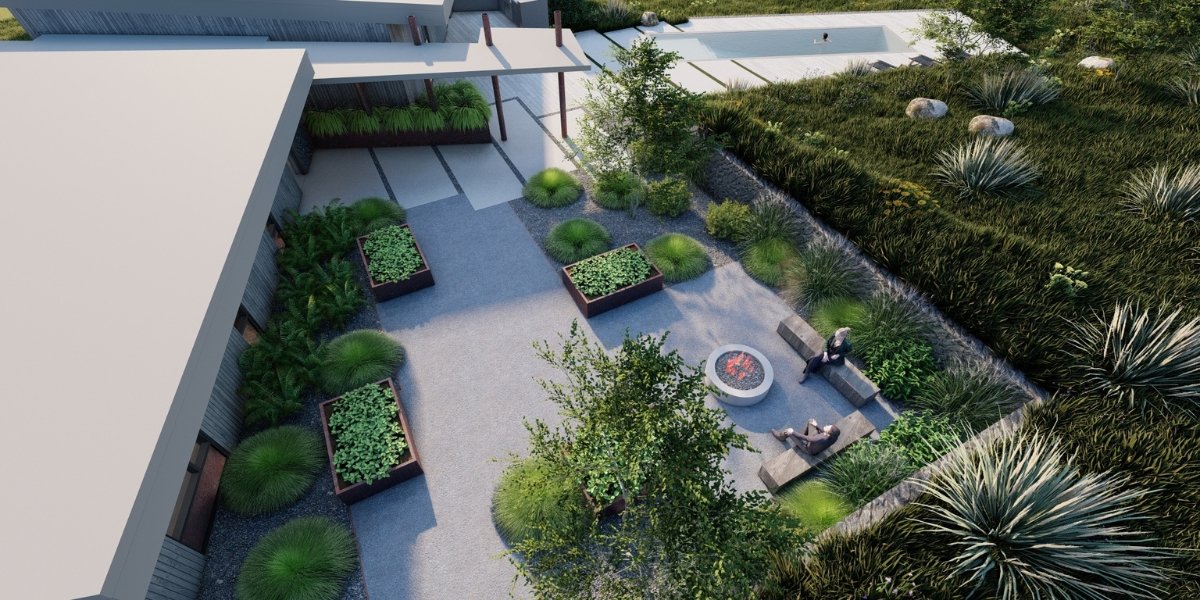
A landscape rendering showing multiple outdoor rooms, created by cleverly using structures, plants, and elements to extend the client’s living space into the great outdoors.
3. Space Is the Core Medium
Landscape architecture is fundamentally about shaping space. Walls, hedges, trees, and changes in elevation are tools for defining outdoor rooms, establishing hierarchy, and guiding movement. Objects are secondary to experience.
At Contexto:
We design landscapes as sequences of spaces. Places to gather, move through, and pause, ensuring each project has spatial clarity and a strong sense of order.
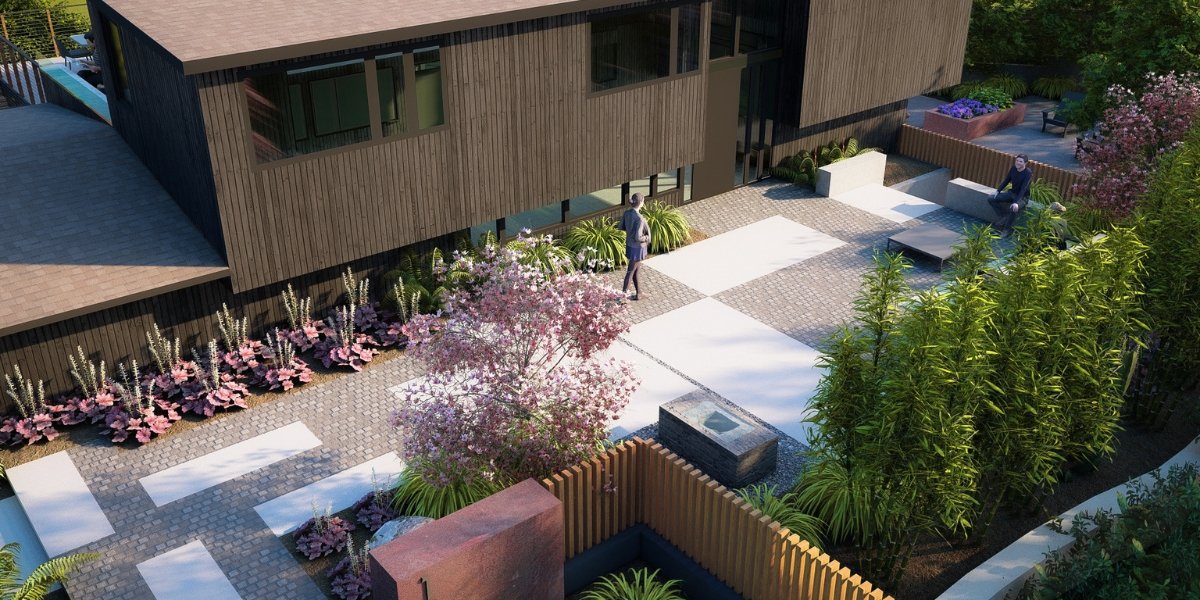
A landscape rendering showing how layout and the integration of architectural plantings/hedging create privacy and living walls.
4. Planting Is Structural, Not Decorative
At Cal Poly, planting design is treated with the same rigor as grading and construction detailing. Plants are understood as spatial elements that define edges, create enclosure, and soften architectural form over time.
At Contexto:
Our planting palettes are intentional and layered, selected to reinforce structure, manage scale, and evolve with the landscape rather than fill space.
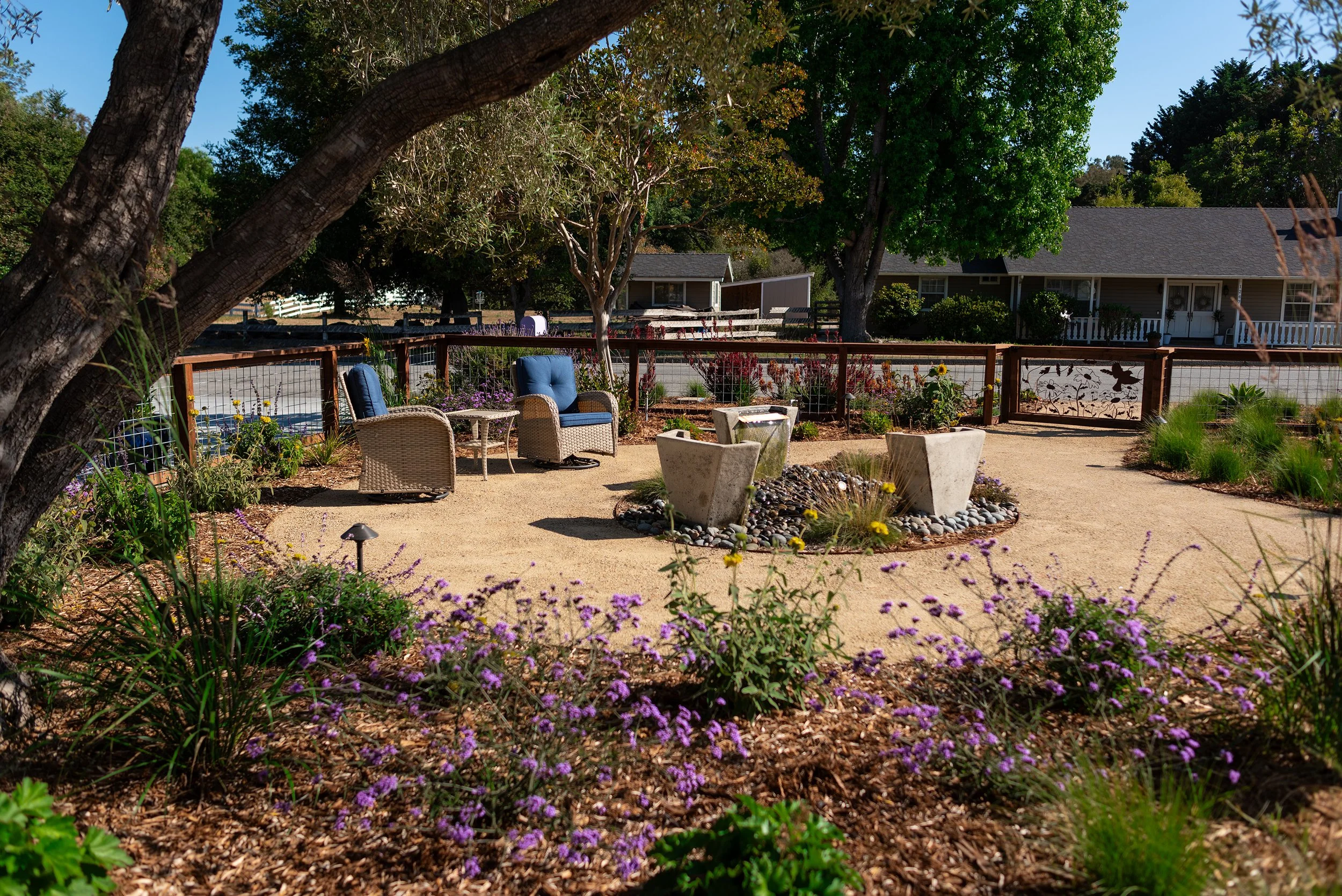
Contexto revisioned three abandoned concrete troughs into a beautiful central water feature. This design idea needed careful planning, research, and creative problem-solving to make sure the concept was feasible.
5. Design Must Be Buildable
Cal Poly's learn-by-doing philosophy reinforces a critical truth: a good idea only matters if it can be executed well. Design must acknowledge construction methods, material performance, and long-term maintenance.
At Contexto:
As a design + build studio, our concepts are developed with construction in mind — ensuring clarity, efficiency, and integrity from design through installation.
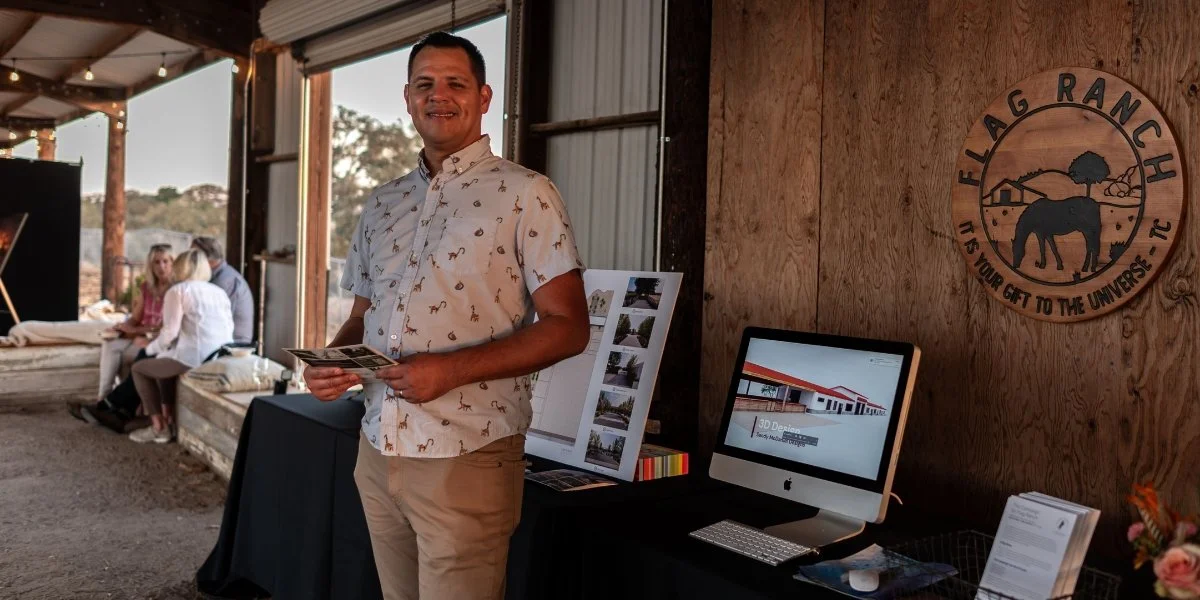
Enrique Guzman presents and pitches a master plan at a fundraiser. His education at Cal Poly and lessons in studio presentations have set him up for success at every stage of the business's growth.
A Foundation That Continues to Inform Our Work
A Cal Poly education does not impose a style — it builds a way of thinking. That mindset remains central to Contexto Landscape Design and Build: disciplined analysis, strong spatial logic, and designs that are both refined and practical. We believe successful landscapes are not added to a site; they emerge from it.
Designing With Intention
If you're seeking a landscape studio grounded in landscape architecture training, thoughtful design, and hands-on execution, we welcome the opportunity to collaborate.